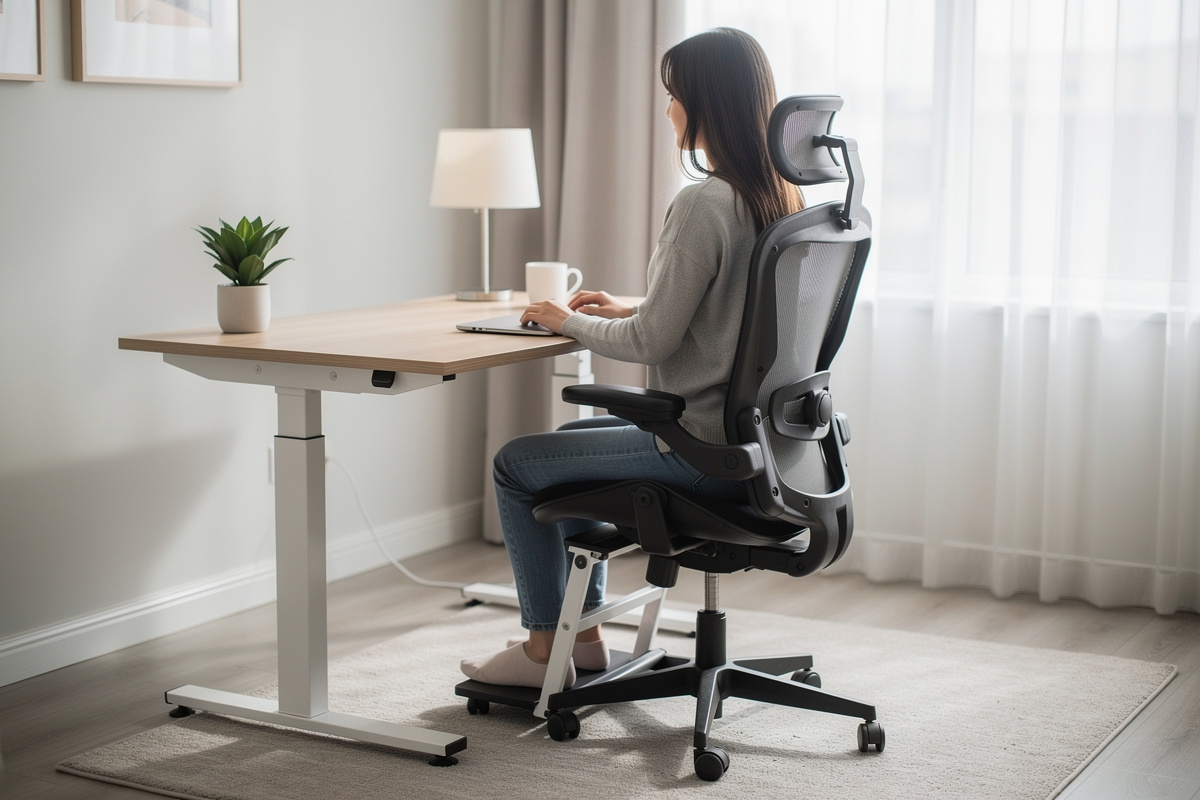

If your desk is too high, you don’t need a new desk — you need about fifteen minutes and, at most, an inexpensive accessory or two. This is the single most common geometry problem I see, because the furniture-standard 74 cm desk only suits people roughly 178 cm and taller, and everyone shorter has spent years quietly reaching up to it without realizing the desk was the problem. Here’s how to confirm the desk is actually too high, then four ways to fix it ranked by cost — none of which is “buy a new desk.” Comfort-and-geometry guidance, not medical advice.
First, confirm it’s actually too high
Before you fix anything, measure, because “feels high” is not data. Sit at the desk the way you actually work — feet flat, back supported, shoulders relaxed — and bend your elbows to 90 degrees with your hands over the keyboard. Now look at your forearms. If they angle up to reach the keys, if your wrists cock back, or if your shoulders quietly ride up toward your ears, the surface is above your seated elbow height. That’s a desk that’s too high.
For the actual number: measure floor-to-elbow (the elbow rule covers this in detail) and compare it to your desk’s surface height. If the desk is more than a centimeter or two above your elbow figure, you’ve confirmed it. Most people doing this for the first time are surprised how far off they are — 4 to 8 cm too high is routine for anyone under about 175 cm at a standard desk.

The fixes, ranked by cost
There are four real options, and the right one depends on whether your chair can go up and whether your feet still reach the floor when it does. Here they are side by side.
| Fix | Cost | Best when | Catch to watch |
|---|---|---|---|
| Raise the chair | Free | Your chair has height range to spare | Your feet may leave the floor |
| Add a footrest | Low | Raising the chair lifts your feet | Needs the right height range |
| Add a keyboard tray | Medium | Desk can’t drop and chair’s maxed out | Needs clearance and mounting depth under the desk |
| Lower the desk (if adjustable) | Free–varies | Adjustable legs or cuttable wooden legs | Fixed metal frames can’t go lower |
Notice that three of the four cost little or nothing, and the expensive-sounding option — replacing the desk — isn’t on the list at all. Work down it in order.
Fix 1: Raise the chair (free, do this first)
The fastest fix flips the problem: instead of lowering the desk to your elbows, you raise yourself to the desk. Pump the chair up until your seated elbow height meets the desk surface and your forearms sit level. Done — the desk is now correct relative to your arms, which is the priority because your arms are where the day is spent.
The catch is below the waist. Raising the chair usually lifts your feet off the floor, or tilts your thighs downward with the seat edge digging into the underside of your legs. If your feet still plant flat and your thighs are roughly level, you’re finished and it cost nothing. If your feet now dangle, go to fix 2.
Fix 2: Add a footrest (low cost, the usual partner to fix 1)
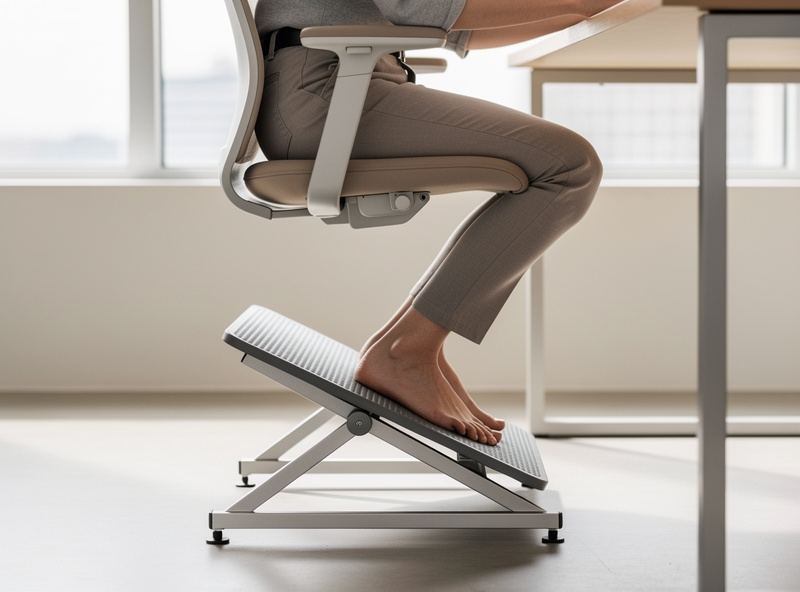
This is the accessory the “raise the chair” method most often forces, and it’s cheap. Once the chair is up at the right elbow height and your feet no longer reach the floor, a footrest gives them a surface so the weight comes off the underside of your thighs and your legs are supported. Aim for a footrest with a bit of height adjustment and, ideally, a slight angle — you want your feet supported with knees somewhere near 90 degrees, not perched on a flat block.
A solid adjustable under-desk footrest is the single most useful purchase for a too-high fixed desk, and it’s the one I reach for first. A sturdy box works in a pinch, but a purpose-made one with adjustable height earns its small cost quickly because you can tune it to your exact gap.
Fix 3: Add a keyboard tray (medium cost, when the chair’s maxed out)
Sometimes the chair is already at its top and the desk still sits above your elbows — common for shorter people at tall fixed desks. The fix here is to bring the working surface down below the desktop with an under-desk keyboard tray. The tray drops your keyboard and mouse to elbow height while the monitor stays up on the desk where it belongs (which, conveniently, often lands the screen closer to eye line too).
An under-desk keyboard tray is the proper answer when chair-and-footrest can’t get you there, but check two things before buying: that you have flat clearance under the desk to mount it, and that the tray’s lowered position actually reaches your elbow height. A tray that only drops 3 cm won’t fix a desk that’s 7 cm too high. Some trays add a slight negative tilt, which keeps the wrists neutral — a genuine bonus, not a gimmick.
Fix 4: Lower the desk itself (free, if it can move)
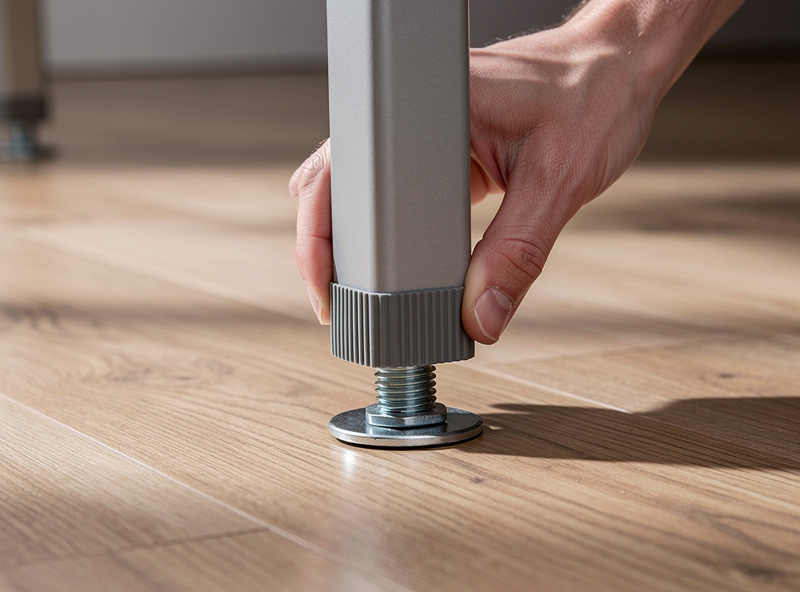
Sometimes you’ve been fighting a problem that has a five-minute solution: if your desk has adjustable legs or feet, just lower them. Plenty of “fixed” desks have leveling feet or telescoping legs that nobody ever touched. And if it’s a wooden desk with solid wooden legs, you can literally cut them down to your measured elbow height — measure twice, cut once, and you’ve turned a too-high desk into a perfectly-dialed one for free. A dual-motor electric standing frame, of course, just drops at the touch of a button; if you have one and it’s too high, you never had this problem, you just hadn’t pressed down. If you’re still deciding whether to go adjustable at all, the standing desk guide covers what to look for.
What you cannot do is lower a welded fixed-height metal frame, which is exactly the case that sends people to fixes 1 through 3. Know which kind of desk you have before you reach for a saw.
Disclosure: As an Amazon Associate I earn from qualifying purchases. The links above are category search links to gear I use in my own setups; they cost you nothing extra and I only suggest the cheap fixes that actually work. This is comfort-and-geometry guidance, not medical advice.
What about a wrist rest or a “better” keyboard?
People often try to fix a too-high desk by buying their way around the symptom — a padded wrist rest, an “ergonomic” keyboard, a fancy mouse. None of it addresses the geometry. If the surface is above your elbows, your wrists are cocked and your shoulders are loaded no matter what keyboard sits on it. Fix the height first; then a wrist rest or a different keyboard is a refinement on a correct setup rather than a band-aid on a wrong one. Order matters: geometry before gadgets.
The verdict
Confirm it’s too high by measuring floor-to-elbow against the desk surface. Raise your chair first (free). Catch your feet with a footrest if they dangle (cheap). If the chair’s maxed out, drop the keyboard with an under-desk tray (medium). And check whether your desk’s legs adjust before you assume anything is locked. Four fixes, three of them little or no money, and not one of them is “buy a new desk.” Log the final numbers and the problem stays solved.
Related reading
- The Correct Desk Height: Full Setup Guide — the complete measure-first method.
- Desk Height Calculator vs. the Elbow Rule — find your target number.
- Monitor Height & Eye Line — once the surface is right, fix the screen.
- Tools I Actually Use — the tape, laser and log.
- Full Setup Breakdowns — measured configurations end to end.
Frequently Asked Questions
How do I fix a desk that is too high?
Raise your chair until your elbows meet the desk surface so your forearms sit level, then add a footrest if your feet no longer reach the floor. If your chair is already at its top, fit an under-desk keyboard tray to bring the keyboard down to elbow height. Check whether your desk’s legs adjust before assuming the height is locked. None of these requires a new desk.
How do I know if my desk is too high?
Sit relaxed with elbows bent to 90 degrees over the keyboard. If your forearms angle up to reach the keys, your wrists cock back, or your shoulders ride up toward your ears, the surface is above your seated elbow height. Confirm it by measuring floor-to-elbow and comparing to the desk height; being 4 to 8 cm too high is common for people under about 175 cm.
Can I lower a fixed-height desk?
It depends on the desk. Many desks have leveling feet or telescoping legs that can be lowered, and a solid wooden desk’s legs can be cut down to your measured elbow height. A welded fixed-height metal frame cannot be lowered, which is when you raise the chair, add a footrest, or fit a keyboard tray instead.
Do I need a footrest if my desk is too high?
Often yes. The usual fix for a too-high desk is to raise your chair to bring your elbows to the surface, which lifts your feet off the floor. A footrest then supports your feet so the weight comes off the underside of your thighs. An adjustable-height footrest lets you tune it to your exact gap with knees near 90 degrees.
Will a different keyboard or wrist rest fix a too-high desk?
No. If the surface sits above your elbows, your wrists stay cocked and your shoulders stay loaded regardless of the keyboard or wrist rest on it. Fix the height first by raising the chair, adding a footrest, or fitting a keyboard tray; only then is a wrist rest or different keyboard a refinement rather than a band-aid.
