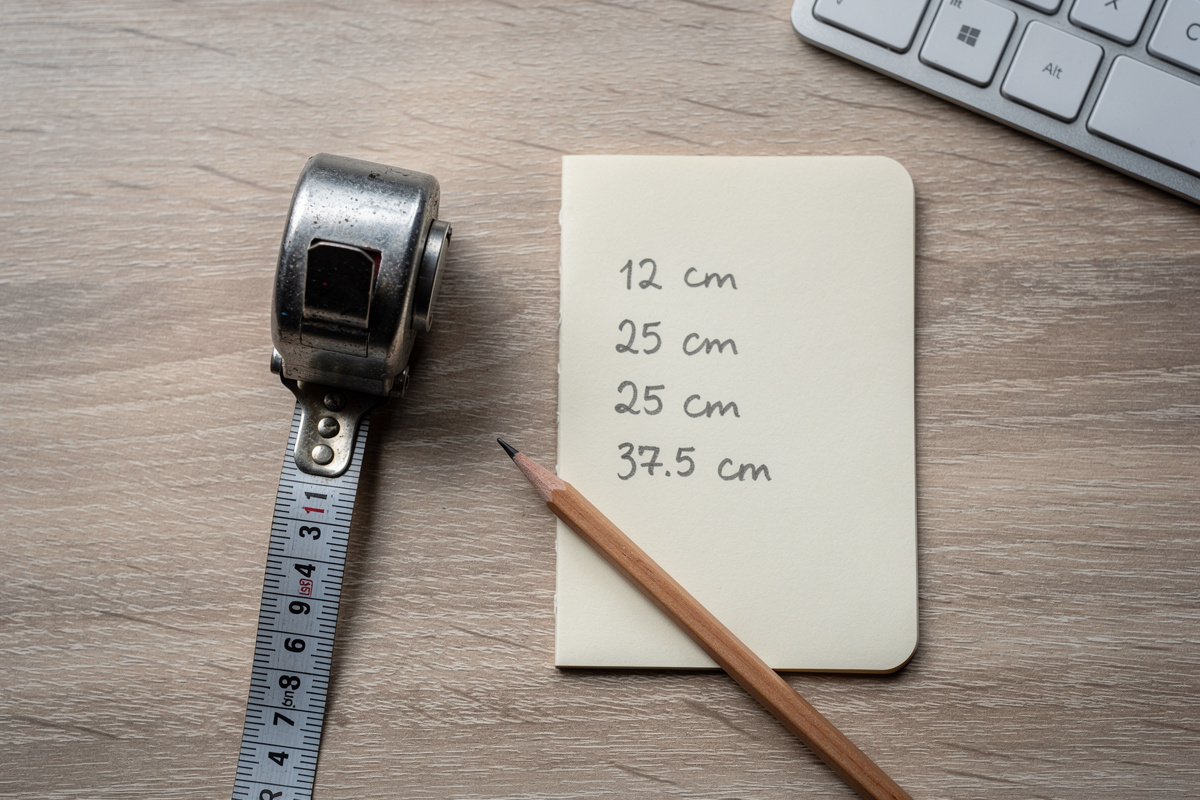

A desk height calculator is a useful sanity check, but it’s not where the right number comes from — your own elbow is. Most online calculators ask for your height and spit out a desk height from a population average, which is exactly the guess that leaves shorter people reaching up for years. I’ll show you how the good ones work, what number to trust instead, and how to turn a five-second measurement into a desk dialed to your body. This is a comfort-and-geometry method, not a medical one.
I keep every workstation I own in a setup log — desk height, seated elbow height, monitor distance — and the one entry that never changes meaning is the elbow measurement. A calculator estimates it from your height; the tape measures it directly. When they disagree, the tape wins, every time.
What a desk height calculator actually does
Under the hood, a height-based calculator applies an anthropometric ratio: it takes your total standing height and multiplies it by a fraction that, on average, lands near seated elbow height for a population. That’s genuinely useful as a first pass — if you have no way to measure and need a starting point, a calculator gets you into the right neighborhood. The honest limitation is the word average. Your forearm length, torso proportions, chair height and even your keyboard’s thickness all move the real number, and none of them are inputs the calculator has.
So treat the calculator output the way I treat the height table on the main desk height guide: a number to confirm you’re in range, not a number to set your desk by. If the calculator says 71 cm and your measured elbow height says 68 cm, set the desk to 68. You are not the average; you are you.
The elbow rule, the only rule you need
Here is the rule every calculator is trying to approximate: your working surface should sit at your seated elbow height, with forearms level and shoulders relaxed. Measure it directly and you’ve skipped the estimation error entirely.
The method, start to finish:
- Sit the way you actually work. Feet flat, back against the lumbar support, shoulders dropped — not braced upright like you’re posing for a photo. This is the step everyone botches.
- Bend your elbows to roughly 90 degrees, forearms parallel to the floor, hands hovering where the keyboard would be.
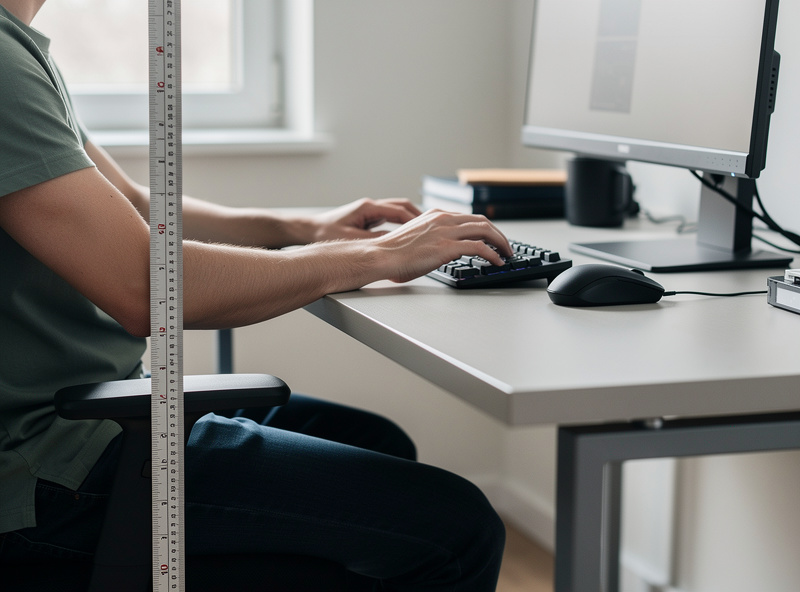
- Measure floor to elbow. From the floor to the underside of your bent elbow, in centimeters. Use a wall and a tape, or have someone read it for you.
- That number is your desk height. Set the surface there. If your desk doesn’t adjust, you raise the chair to that elbow height instead and support your feet — covered below.
- Log it. Write the number down so the next time you wonder, you’re not re-measuring from scratch.
Why the elbow and not your wrist or your height
People ask why we anchor on the elbow rather than the wrist or the keyboard. The answer is mechanical. When your forearm is level at the surface, your upper arm hangs naturally from the shoulder — no lifting, no shrugging. Drop the surface and your wrists bend up to reach the keys; raise it and your shoulders climb to compensate. The elbow is the joint where “forearm level” and “shoulder relaxed” are both true at once, so it’s the single point that fixes the whole upper-body chain. Everything downstream — wrist angle, shoulder load — follows from getting that one height right.
Height-based calculators chase this indirectly. They assume your elbow sits at a fixed ratio of your height, which holds on average but breaks for anyone with long or short forearms relative to their stature. Measuring the elbow removes the assumption.
When you can’t lower the desk: raise the chair, support the feet
Most desks are fixed slabs near 74 cm, and a calculator telling you that you “need” 68 cm doesn’t help if the desk won’t move. The geometry still works — you solve it from the chair instead:
- Raise the chair until your seated elbow height meets the desk surface. Forearm level at the desk is the priority because your arms are where the day is spent.
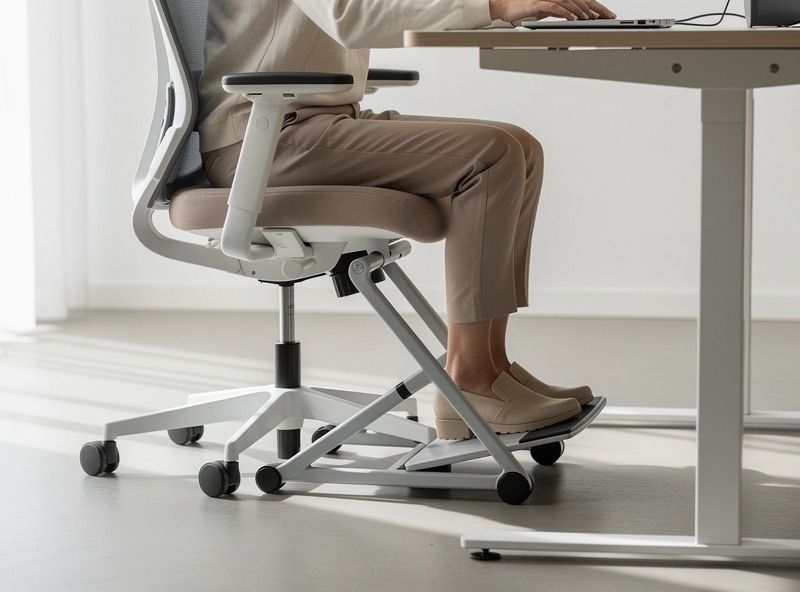
- Catch your feet. Raising the chair usually lifts your feet off the floor. Dangling feet put pressure under the thighs, so add a footrest — the one accessory this method genuinely forces, and an inexpensive one.
- Confirm the thighs. Aim for level thighs or a slight downward slope to the knee, no hard pressure from the seat edge. Pressure there is a chair-fit issue, not a desk-height one.
This “chair up, feet supported” sequence is why footrests show up under so many well-dialed fixed desks. The desk didn’t change; you moved yourself to it and supported what fell out below.
A reference table to check the calculator against
If you want to gut-check whatever number a calculator gave you, here’s the rough seated range I’d expect by height. These are estimates to confirm you’re in the neighborhood — measure your elbow for the real figure.
| Your height | Typical seated desk height | Footrest likely needed on a fixed 74 cm desk? |
|---|---|---|
| 160 cm | ~64–66 cm | Yes |
| 170 cm | ~67–70 cm | Often |
| 178 cm | ~70–73 cm | Sometimes |
| 188 cm | ~73–76 cm | Rarely |
The pattern is the same one the main guide flags: the 74 cm default fits tall users and quietly asks everyone shorter to reach up. If the calculator and your height both put you well under 74 and your desk is fixed, the footrest column is telling you what to budget for.
The few tools worth owning
You genuinely need almost nothing here. A basic tape measure does the whole job. If you’re dialing in multiple workstations or want repeatable readings, a small laser measure makes floor-to-elbow and monitor-distance readings faster and more consistent than stretching a tape solo. And if your fixed desk leaves your feet dangling, an adjustable under-desk footrest is the one purchase the chair-first method actually forces. That’s the list.
Disclosure: As an Amazon Associate I earn from qualifying purchases. The links above are search links to gear categories I use myself; they cost you nothing extra and I only point at tools that earn their place in a measured setup. This is comfort-and-geometry guidance, not medical advice.
Calculator vs. tape: the verdict
Use a calculator if you have no other option and need a starting number tonight. But the moment you can lay hands on a tape measure, measure your seated elbow height directly — it takes five seconds, it removes the population-average error, and it’s the number I’d set any desk to. Log it once and you never have to wonder again. The calculator estimates the answer; your elbow is the answer.
Keep reading
- The Correct Desk Height: Full Setup Guide — the complete measure-first method this fits into.
- Start Here — the measurement-first doctrine in brief.
- Ergonomics Glossary — elbow height, eye line, negative tilt defined.
- Tools I Actually Use — the tape, laser and log template.
Frequently Asked Questions
Are desk height calculators accurate?
They are accurate enough as a starting point. A calculator estimates your seated elbow height from your total height using a population-average ratio, which lands in the right neighborhood for most people but ignores your forearm length, chair and keyboard thickness. Measure your elbow height directly with a tape and use that number instead whenever you can.
How do I calculate my ideal desk height myself?
Sit relaxed with feet flat and elbows bent to about 90 degrees, forearms parallel to the floor. Measure from the floor to the underside of your elbow in centimeters. That figure is your ideal seated desk height. It beats any height-based calculator because it measures your body directly instead of estimating from an average.
What if the calculator says my desk is too high?
If your desk is fixed and the number is lower than its height, raise your chair until your elbows meet the desk surface, then add a footrest so your feet are supported. This keeps your forearms level, which is the priority, and solves the dangling-feet problem without buying a new desk.
Should I use my standing or seated height in a calculator?
Use seated measurements for a seated desk and standing measurements for a standing desk, because your elbow height differs in each position. A good calculator asks which you want; if it only takes your total height, treat the result as a rough seated estimate and confirm it by measuring your actual elbow height in the position you will work in.
