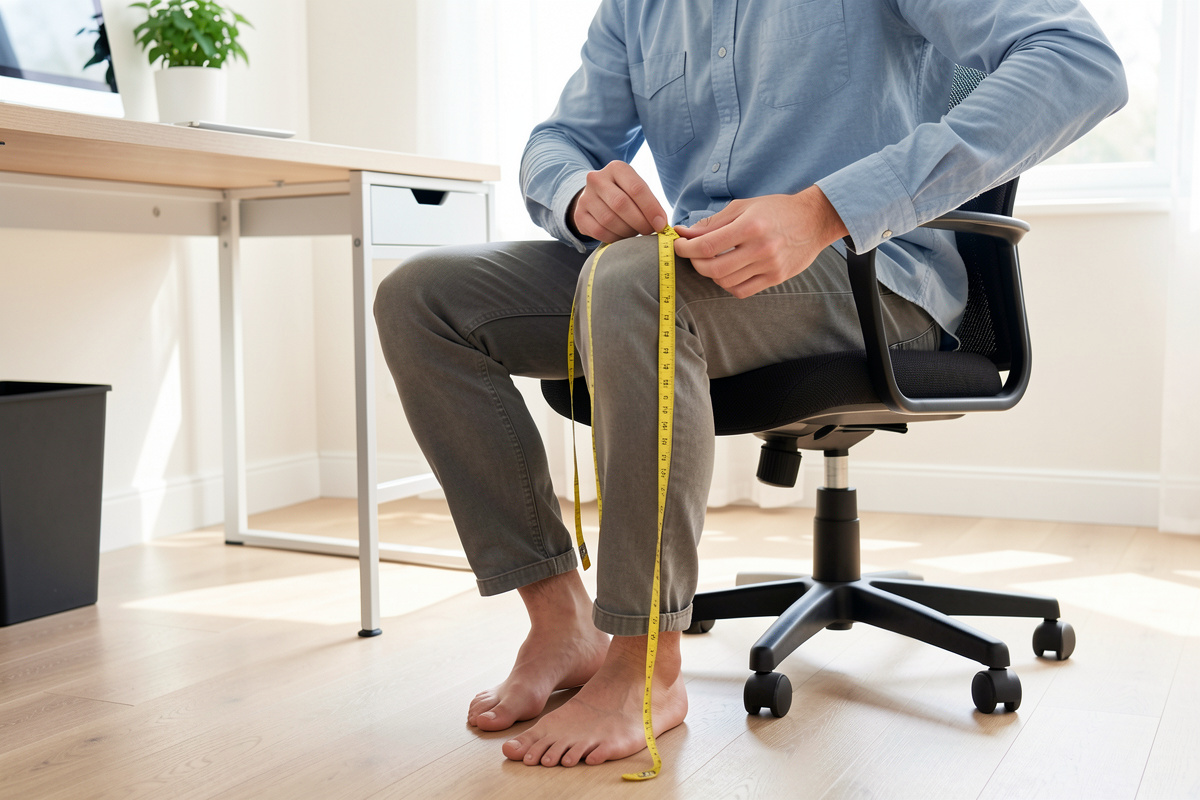

To fit an ergonomic chair by body measurements you need three numbers: popliteal height, femur length, and seated elbow height. Match them to the chair’s published seat-height, seat-depth, and armrest ranges and the chair fits before you ever sit in it.
This is the part of chair buying that the people selling chairs never lead with, because it turns an emotional showroom decision into a boring spec-sheet filter. I do it for every chair I bring into my office, and I keep the numbers in the same setup log where I track desk height and monitor distance. The method is non-medical from start to finish: I am matching dimensions for comfort and fatigue over a long working day, not diagnosing or fixing anything.
The Three Measurements That Decide Fit
The three measurements are popliteal height, femur length, and seated elbow height, and you can take all three in ten minutes with a tape measure and a hard, flat chair. Everything else about chair fit is downstream of these numbers.
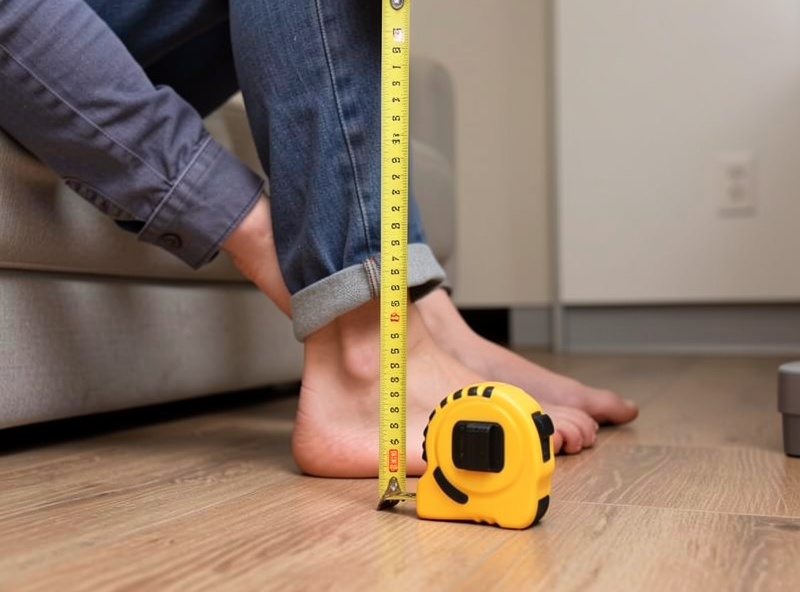
Popliteal height is the distance from the floor to the underside of your thigh just behind the knee while you sit with feet flat and lower legs vertical. It sets the seat height you need so your feet land flat and your thighs sit roughly level. Femur length is the horizontal distance from the back of your buttock to the back of your knee, and it sets your seat depth. Seated elbow height is floor to the underside of your elbow with shoulders relaxed and elbows bent to 90 degrees, and it sets where the armrests have to reach. Mine run about 47 cm popliteal, 48 cm femur, and an elbow height that puts the armrests well below where most fixed arms sit. Yours will differ, and that difference is the entire point: there is no universal chair, only a chair whose ranges contain your numbers.
How to Map Your Numbers to Chair Dimensions
Convert each body measurement into a chair-spec requirement: seat height should reach your popliteal height, seat depth should adjust to your femur length minus 2-3 cm, and armrest height should reach your seated elbow height. Then read the chair’s spec sheet and check whether its ranges cover those targets.
The 2-3 cm subtraction on seat depth is the clearance behind your knee, two to three finger-widths, so the seat front does not press into the soft tissue there. If your femur is 48 cm, you want a seat that adjusts to around 45 cm. For seat height, you want the range to bracket your popliteal height, not just barely reach it, because you will also be adjusting desk height around it. Here is the mapping I use as a checklist when reading any chair’s specs.
| Your measurement | What it sets | Chair spec to check | Fit rule |
|---|---|---|---|
| Popliteal height (floor to under-knee) | Seat height | Seat height adjustment range | Range must bracket your value |
| Femur length (buttock to back of knee) | Seat depth | Seat depth (sliding pan) range | Adjusts to femur minus 2-3 cm |
| Seated elbow height | Armrest height | Armrest height adjustment range | Range must reach your value |
| Lower-back curve position | Lumbar contact | Lumbar height travel | One extreme lands on your curve |
If a chair’s spec sheet does not publish these ranges, that silence is information. The manufacturers who build genuinely adjustable chairs are proud of the numbers and print them; the ones selling a fixed pan with an “ergonomic” sticker tend to leave them off. To take your own measurements precisely I lean on a laser tape measure, though an ordinary tape does the job fine.
Why a Fixed Chair Fails Most People
A fixed-dimension chair only fits the narrow band of bodies whose measurements happen to match its factory settings, roughly a person of average height with average proportions. Everyone taller, shorter, or differently proportioned is fitting themselves to the chair instead of the other way around.
I keep a budget chair with a fixed seat pan precisely so I can feel this. Its pan runs about 3 cm too deep for my femur, so within a couple of hours I am perched on the front edge with my back off the lumbar entirely, which defeats the whole reason to own the chair. A taller colleague finds the same chair too shallow, thighs hanging off the front. Same chair, two bodies, two different failures, both caused by one number nobody can change. That is the structural weakness of fixed chairs: they are a bet that the factory guessed your dimensions, and the odds are against you unless you are statistically average.
Testing Fit When You Sit Down
Once the spec sheet says a chair can fit you, confirm it in person with three quick checks: feet flat with thighs level (seat height), two-finger gap behind the knee (seat depth), and forearms resting without shoulders lifting (armrest height). Thirty seconds tells you whether the numbers translated to your body.
Set the seat height first so your feet are flat and your thighs sit level or tilt very slightly downward, and remember the seat height you land on then drives your desk height calculation, not the other way around. Then slide the seat pan until you can fit two fingers between the front edge and the back of your knee. Then drop or raise the armrests until your forearms rest on them with your shoulders completely relaxed, not hiked up. If you cannot get all three at once, the chair’s ranges do not actually cover you regardless of what the spec sheet implied, and you move on. This is also where you catch a sloppy tilt mechanism, lean back slowly and see whether it holds an intermediate angle or dumps you. The free desk-height fixes in the broader system matter here too, because seat height and desk height are set together, never separately, which is why I treat the chair as one input to the whole ergonomic chair guide method rather than an isolated purchase.

Recording Your Fit So You Can Repeat It
Write down the chair settings that fit you, seat height in centimeters, seat-depth position, armrest height, lumbar position, so you can restore them after anyone else adjusts the chair or when you set up a second one. A fit you cannot reproduce is a fit you will lose.
This sounds fussy until the first time someone borrows your chair, cranks every lever, and hands it back a stranger. With the numbers logged, I reset mine in under a minute. The log also pays off when buying a second chair or a replacement: I already know my target seat depth and armrest height, so I am filtering candidates against proven numbers instead of starting over. Treating the chair like a measured instrument rather than a piece of furniture is the same instinct I apply to every bench I run, and it is what keeps the fit consistent across years and across chairs.
One concrete example of why the log earns its place: when my mid-tier chair developed a slow gas-cylinder sag last winter, I dropped a replacement cylinder in and had the seat back to my logged 47 cm popliteal value in about a minute, because I knew the exact number rather than re-finding it by feel. Without that record I would have spent a week subtly too low, shoulders creeping up to reach the desk, never quite sure what had changed. The whole argument for measuring is that a number you wrote down survives a hardware swap, a house move, or a borrowed afternoon, where a vibe does not. It costs you ten minutes once and pays back every time the chair gets disturbed.
Frequently Asked Questions
What measurements do I need to fit an ergonomic chair?
Three: popliteal height (floor to underside of knee, seated), femur length (back of buttock to back of knee), and seated elbow height. These set the seat height, seat depth, and armrest height the chair must be able to reach.
How do I measure my femur length for a chair?
Sit on a hard flat chair with feet flat and lower legs vertical. Measure horizontally from the back of your buttock to the back of your knee. Subtract 2-3 cm for knee clearance to get your target seat depth.
What if a chair’s spec sheet does not list its dimensions?
Treat the missing numbers as a warning. Manufacturers who build genuinely adjustable chairs publish seat-height, seat-depth, and armrest ranges. A spec sheet that hides them usually means a fixed pan and limited adjustment behind an ergonomic label.
Can I fit a chair without sitting in it first?
You can shortlist by matching the chair’s published ranges to your three measurements, which removes most bad options. A 30-second in-person check (feet flat, two-finger knee gap, relaxed forearms) confirms the numbers translated to your body.
Why does the same chair feel different to different people?
Because fit depends on body dimensions, not the chair alone. A fixed-pan chair that suits an average-height person runs too deep for shorter people and too shallow for taller ones. Adjustable seat depth is what lets one chair fit a range of bodies.
As an Amazon Associate I earn from qualifying purchases. The link above is a category search link to gear I use myself; it costs you nothing extra. This is comfort-and-geometry guidance, not medical advice.
