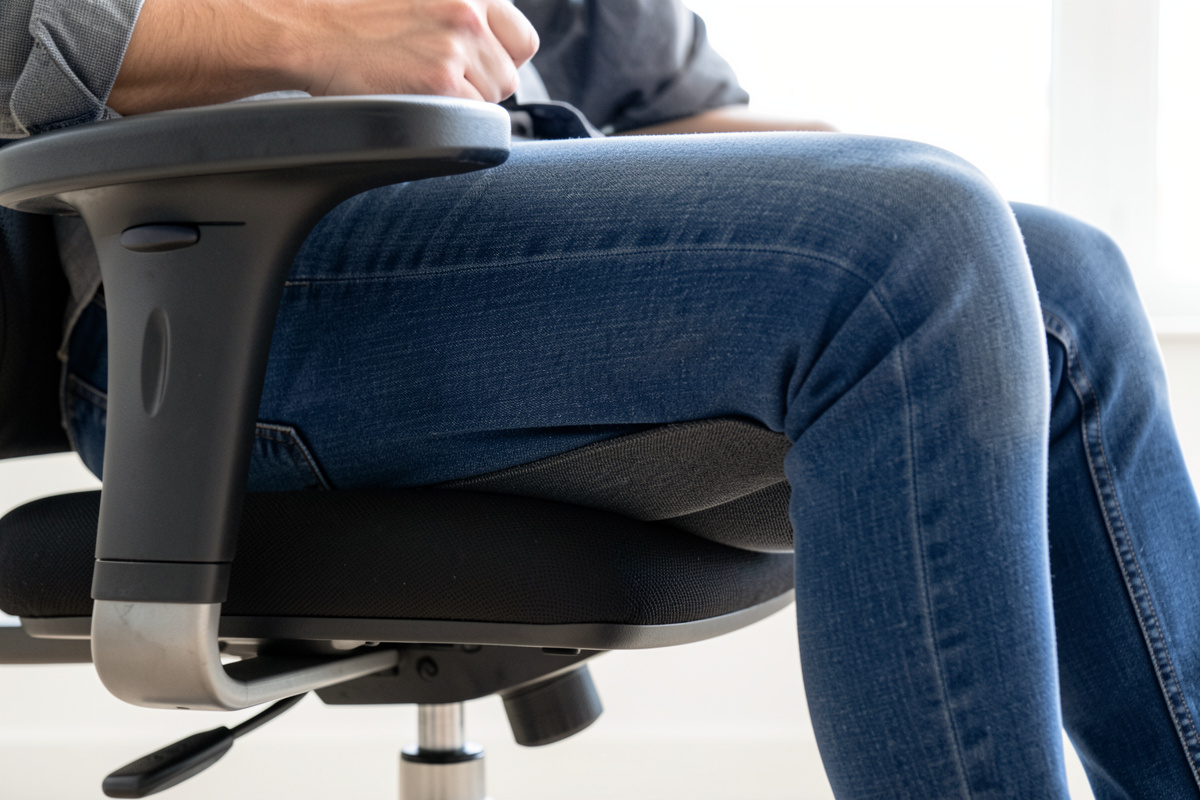

The seat depth femur rule says your chair’s seat pan should be 2-3 cm shorter than your femur length, leaving a two-to-three finger gap between the seat front and the back of your knee. It is the single dimension that decides whether a chair works over a long day.
I came to treat this as the first filter on any chair after watching one number ruin an otherwise good seat in my own office. The mechanics are simple and entirely about comfort and load distribution, not health, and once you have measured your femur once you carry the rule with you to every chair you ever sit in.
What the Seat Depth Femur Rule Actually Is
The rule: measure your femur length (back of buttock to back of knee, seated), subtract 2-3 cm, and that is your ideal seat depth. The subtraction is clearance so the seat’s front edge clears the soft tissue behind your knee instead of pressing into it.
Two to three finger-widths is the field version of the rule, and it is what I use when I cannot measure precisely. Sit all the way back against the lumbar, then see how many fingers fit flat between the front edge of the seat and the back of your knee. Two or three is the target. Zero fingers means the pan is too deep and the edge is loading the back of your knee. A whole fist of gap means the pan is too shallow and your thighs are unsupported toward the knee, dumping your weight onto a smaller contact area. The rule works because thigh support should run almost the full length of the femur but stop short of the sensitive tissue at the knee.
How to Measure Your Femur for the Rule
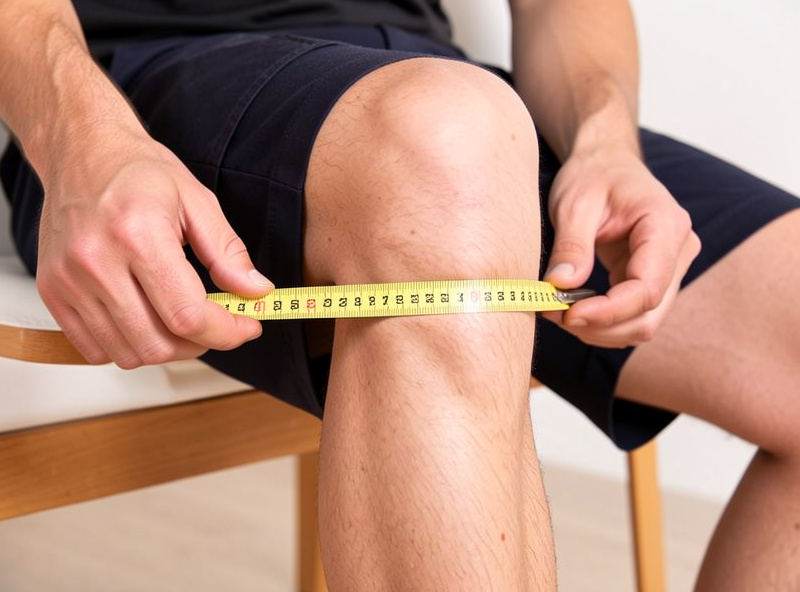
Sit on a hard, flat chair with your feet flat on the floor and lower legs vertical, then measure the horizontal distance from the back of your buttock to the back of your knee. That is your femur length for chair purposes, and subtracting 2-3 cm gives your target seat depth.
Mine measures about 48 cm, so my target seat depth is roughly 45 cm. Do it seated, not standing, because the soft tissue compresses differently and the seated number is what the chair actually sees. A tape measure is plenty; I happen to use a laser tape measure only because it already lives on my desk for setup logging. Write the number down once and you never measure again, the femur does not change, and you now have a hard target that disqualifies any chair whose seat depth cannot reach it.
What Happens When the Seat Is Too Deep
A seat that is deeper than your femur forces a bad choice: sit back and let the edge press behind your knees, or slide forward off the backrest to relieve it. Most people unconsciously pick the second, which means the lumbar support you paid for never touches your back.
This is the exact failure mode of the fixed-pan budget chair in my office, which runs about 3 cm too deep for me. Within a couple of hours I notice I have crept forward to the front third of the seat, perched, with my whole back off the backrest. At that point the chair is just a stool with an expensive-looking back I am not using. The give-away is reaching the end of a working session and realizing you have not leaned back once. A too-deep seat also concentrates pressure under the thighs near the knee, which is a comfort and circulation-comfort issue over hours, not a medical claim, just the plain fact that a hard edge under your leg gets uncomfortable.
What Happens When the Seat Is Too Shallow
A seat shallower than your femur leaves the last several centimeters of thigh unsupported, so your weight rides on a smaller patch of the seat and the front of your thighs droop. It is less common than too-deep but just as fatiguing over a full day.
Tall people hit this constantly with average chairs: the pan ends well before their knee, thighs cantilever off the front, and there is no way to add depth to a fixed pan. The body compensates by perching forward or by slumping to shift load, neither of which is comfortable for long. When I let a taller friend try the same budget chair that is too deep for me, it was suddenly too shallow for him, his knees well past the seat edge. One chair, opposite failures, which is the whole argument for a sliding seat pan if you are not statistically average in leg length.
Why a Sliding Seat Pan Solves It
A sliding (depth-adjustable) seat pan lets you set the depth to your femur regardless of the chair’s default, which is why I treat it as a near-mandatory feature for anyone outside average height. It converts a one-size guess into a fitted dimension.
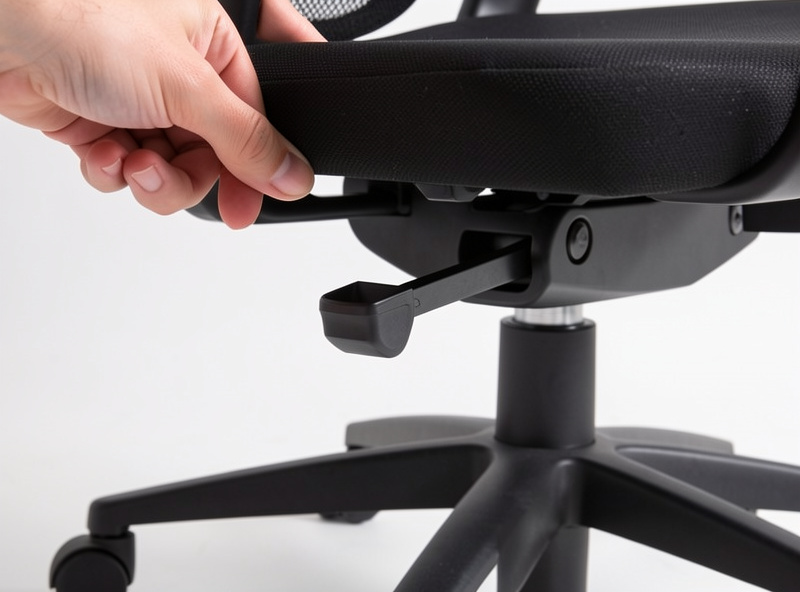
The mechanism is usually a lever under the seat that slides the pan forward or back over a range of several centimeters. On my mid-tier chair I set it once to my 45 cm target and it has stayed fitted ever since, which is why that chair stays comfortable into the seventh hour where the fixed budget chair does not. When you are reading spec sheets, the presence and range of seat-depth adjustment is the line I check first, before lumbar, before armrests, because it is the dimension most likely to be wrong and the one you cannot work around. Worth knowing how the range itself is published: most adjustable pans quote a span like 40 to 46 cm, and what you actually care about is whether your target value sits inside that span with a centimetre or two of headroom on each side, not just barely at the limit. A pan that only reaches your number at the very end of its travel will creep back under daily use, and you lose the fit you set. I check the published range against my logged 45 cm target the same way I check a frame load rating against my real monitor weight, the spec is a claim until a number I own confirms it. This connects directly to the broader chair fit by body measurements method and the full ergonomic chair guide, where seat depth is one of the four dimensions you map to your body before buying.
Seat Depth Is Connected to Desk Height
Seat depth sets how far back you sit, which sets where your elbows land relative to the desk, which feeds your desk-height math. Fit the seat depth first, then set seat height, then calculate desk height, in that order, because each one constrains the next.
If you skip seat depth and set everything else, then later fix the depth, you have to redo the chain, because sitting properly back changes your reach and your elbow position over the desk. I learned to do it in order after redoing my own setup twice. The chair is the foundation of the seated geometry, and the desk height guide picks up exactly where the seat-depth fit leaves off. Treating the whole thing as one measured system, rather than separate purchases, is what keeps a long working day comfortable.
Frequently Asked Questions
What is the seat depth femur rule?
Set your chair’s seat depth to your femur length minus 2-3 cm, leaving a two-to-three finger gap between the seat front and the back of your knee. This supports the thigh without the front edge pressing into the soft tissue behind the knee.
How do I measure my femur for seat depth?
Sit on a hard flat chair with feet flat and lower legs vertical. Measure horizontally from the back of your buttock to the back of your knee. Subtract 2-3 cm for clearance to get your target seat depth.
What does it feel like when a seat is too deep?
You either feel the front edge pressing behind your knees or you slide forward off the backrest to relieve it. The tell is finishing a work session realizing you never leaned back, because the lumbar never touched you.
Can I fix a seat that is too deep?
Only if the chair has a sliding seat pan that adjusts shallower. A fixed pan that is too deep cannot be corrected; a lumbar cushion only moves you further forward. This is why depth adjustment matters most for non-average leg lengths.
Is seat depth more important than lumbar support?
For initial fit, yes. If the seat depth is wrong you slide off the backrest and never contact the lumbar, so the lumbar setting becomes irrelevant. Get depth right first, then position the lumbar to your lower-back curve.
As an Amazon Associate I earn from qualifying purchases. The link above is a category search link to gear I use myself; it costs you nothing extra. This is comfort-and-geometry guidance, not medical advice.
