

Buying a used Steelcase or Herman Miller chair is the highest-value move in office seating: a contract chair that sold new for a four-figure sum turns up used at a third to half that price, built for well over a decade of all-day use. The smart money buys an old great one and inspects it properly.
My own premium chair came used, and it has outlasted two newer budget chairs that cycled through my office in the same years. This is the buying argument I make from experience, framed entirely around dimensions, durability, and value, not health. The trick is knowing exactly what to check before you hand over money, because a used chair carries whatever wear the last owner left it.
Why Used Premium Beats New Budget
Contract office chairs are designed for shared, all-day, multi-year use, so they are built with replaceable parts, deep adjustment ranges, and mechanisms rated for far longer service lives than consumer chairs. Buying one used gets you that engineering at consumer-chair money.
A flagship office chair was specified to survive a corporate floor: many different bodies, eight hours a day, for the length of a facilities contract. That means a seat depth that adjusts, a lumbar that moves, arms that adjust on multiple axes, and a tilt mechanism built to a duty cycle a home chair never sees. When that chair hits the used market after an office refit, you inherit all of that for a fraction of new. Compare that to a new budget chair whose foam flattens in a year and whose fixed pan may not even fit you. The math is lopsided, which is exactly why the used market for these chairs is so deep and why I keep recommending it. A used Herman Miller Aeron or similar contract chair is the search I point people at first.
Check the Gas Cylinder First
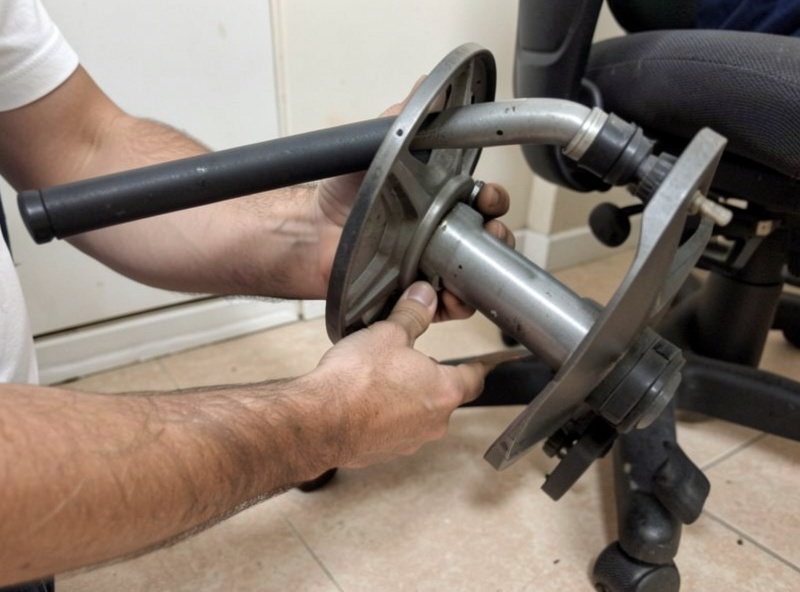
The single most common failure on a used office chair is a worn gas cylinder that slowly sinks under your weight. Sit in the chair, raise it to mid-height, and see if it holds; a chair that drifts down within minutes needs a new cylinder, which is cheap to replace but must be priced into the deal.
The good news is that a sinking cylinder is not a dealbreaker, it is one of the cheapest and easiest parts to swap, and a replacement gas cylinder is a standard size on most contract chairs. The point is to catch it during inspection so you can negotiate the price down accordingly, not discover it at home. I always test the cylinder before anything else because it is the most likely thing to be tired on a chair that has done years of service, and it is the easiest thing for a seller to hide in a five-minute showing by simply not letting you sit long enough to feel the drift. A useful field test is to set the seat high, sit for a full minute, and watch whether your eye line has dropped relative to a fixed point on the wall; a healthy cylinder holds, a tired one visibly sinks. Replacement cylinders are sold by class and stroke length, so match the new one to the chair rather than grabbing a generic, and budget it as a small line item rather than a reason to walk.
Check the Mechanism and Armrests
Work every adjustment through its full range: the tilt should move smoothly and lock where you leave it, the seat-depth slider should glide and hold, and the armrests should adjust and stay put without flopping. Play, grinding, or a lock that will not catch points to a worn mechanism, which is far costlier than a cylinder.
The tilt mechanism is the heart of a contract chair and the part you most want intact, so I spend the most inspection time here. Lean back slowly, stop at an intermediate angle, and confirm it holds; cycle the tension knob and feel it actually change resistance; lock and unlock the tilt several times. On the arms, check height, width, and pivot if the model has them, and make sure each setting stays put under a push. A little surface wear is fine on a chair built for a decade-plus; a mechanism with slop is the one defect I walk away from, because replacing the whole mechanism rarely pencils out on a used buy. This level of mechanical scrutiny is the same approach as the used standing desk checklist on the frame side.
Two more parts get a quick look while you are down there. Flip the chair and check the base and casters: a cracked five-star base is a real safety problem and rarely worth fixing, whereas tired casters are a five-minute swap for a standard-stem set and should pull the price down, not end the deal. Then read the upholstery and foam honestly. On a mesh chair, press the seat front and look for sag or a stretched, wavy weave that signals the mesh has lost its tension; on a foam chair, sit and feel whether the seat bottoms out under you, because flattened foam on a contract chair is harder to source than a cylinder. Surface scuffs and faded fabric are cosmetic and fine. A sagging seat surface is the one upholstery fault I treat like a mechanism fault: it changes how the chair fits, which is the whole reason you are buying a contract chair in the first place.
Confirm the Dimensions Actually Fit You
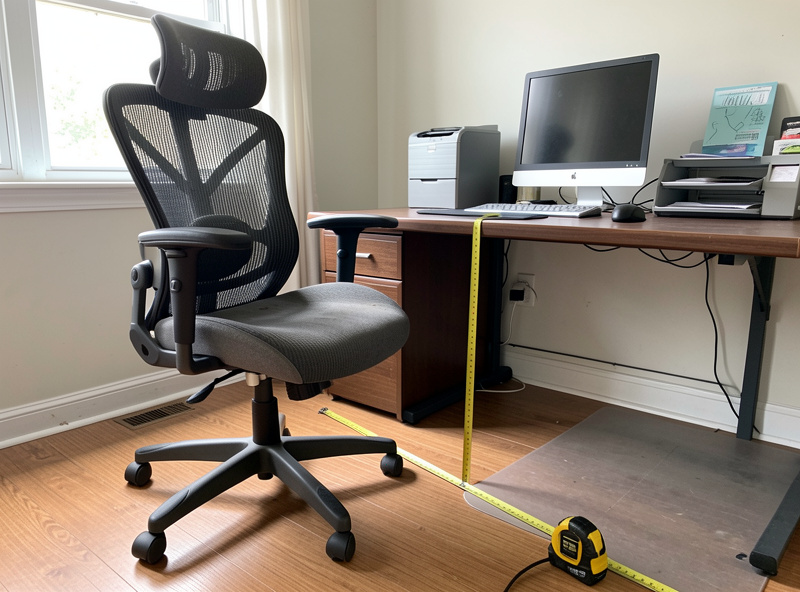
A used premium chair is only a bargain if it fits your body, so bring your three measurements (popliteal height, femur length, seated elbow height) and verify the chair’s ranges cover them before you fall for the brand. A famous logo does not override the seat-depth femur rule.
Some flagship chairs come in multiple sizes, and an office refit dumps whatever sizes that office bought, which may not be yours. So I apply the exact same filter I use for any chair: does the seat depth adjust to my femur minus 2-3 cm, does the seat height bracket my popliteal height, do the arms reach my elbow height. If a gorgeous used chair fails the seat-depth check for my body, it is the wrong chair no matter how good the deal looks, and I pass. The full method is in the chair fit by body measurements guide, and the underlying rule is the seat depth femur rule, both of which apply to a used chair exactly as they do to a new one.
Where Used Premium Chairs Come From
Used contract chairs flow out of office liquidations, refurbishers, and corporate refits, which is why local business-furniture resellers and office-clearance listings tend to have better stock and prices than general marketplaces. Refurbished units cost more but often come with replaced wear parts.
You generally trade price against assurance. A bare used chair from a clearance is cheapest but you inspect it yourself and accept it as-is. A refurbished chair from a specialist costs more but typically arrives with a fresh cylinder, cleaned upholstery, and sometimes a warranty, which can be worth it if you cannot inspect in person. Either way the chair underneath is the same contract-grade machine. I favor inspecting in person when I can, because the cylinder and mechanism tests take two minutes and tell me everything, but a reputable refurbisher is a fair substitute when buying remotely. Whichever route you take, the value logic holds: this is the buy that gives you the top tier of the ergonomic chair guide for mid-tier money.
Frequently Asked Questions
Is a used Steelcase or Herman Miller chair worth it?
Yes. Contract chairs are built for over a decade of all-day use with deep adjustment ranges and replaceable parts. Used, they cost a third to half of new, far outvaluing a new budget chair whose foam flattens within a year.
What should I check on a used office chair?
Test the gas cylinder for sinking, work the tilt mechanism and seat-depth slider through full range for smoothness and lock, and confirm armrests hold their settings. Then verify the chair’s dimensions fit your femur, popliteal, and elbow measurements.
How much should a used premium chair cost?
Roughly a third to half of its original new price, depending on condition and whether it is refurbished. A sinking cylinder or worn upholstery should pull the price down further, since the cylinder is cheap to replace.
Can I replace a worn gas cylinder myself?
Usually yes. The gas cylinder is a standard size on most contract chairs and one of the cheapest, easiest parts to swap. A sinking cylinder is a negotiation point, not a dealbreaker, so price it into the offer.
Does the brand matter more than fit?
No. A famous logo does not override the seat-depth femur rule. Bring your three measurements and confirm the chair’s ranges cover them; some flagship chairs come in sizes, and an office refit may not have your size.
As an Amazon Associate I earn from qualifying purchases. The links above are category search links to gear I use myself; they cost you nothing extra. This is comfort-and-geometry guidance, not medical advice.
