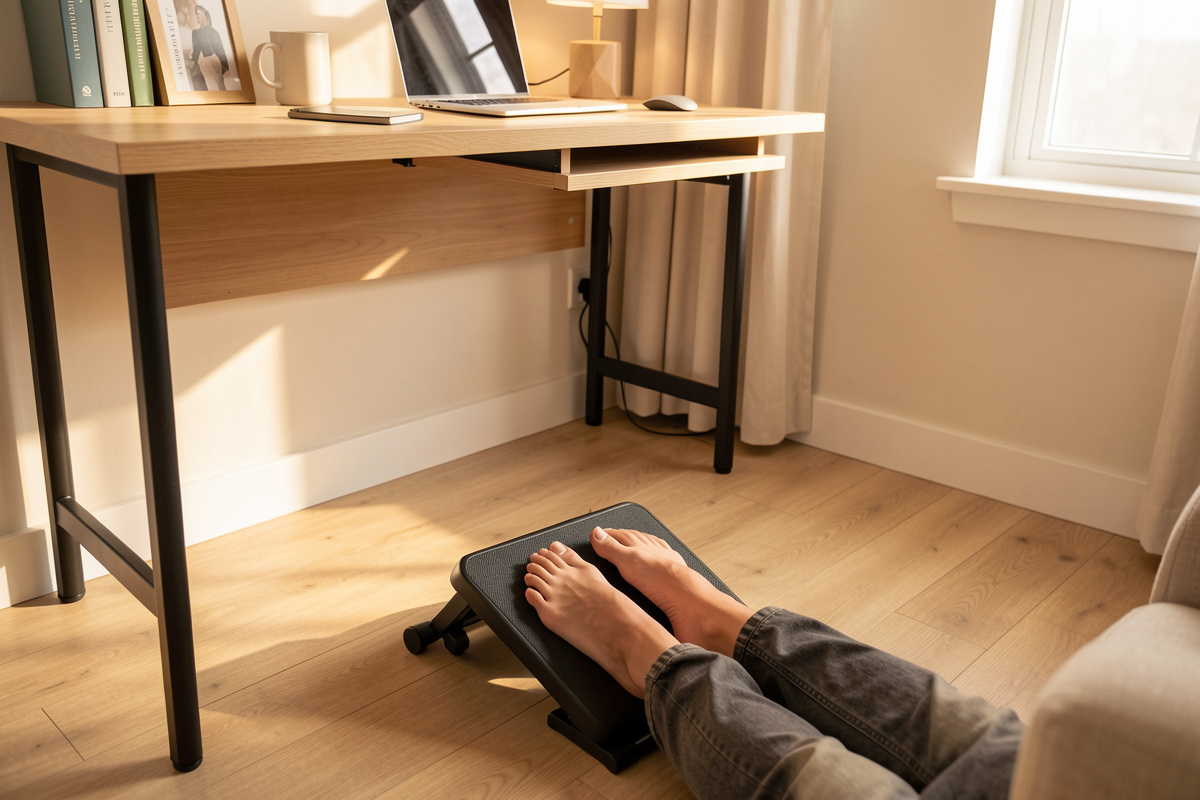

A footrest is not a default desk purchase. It is the fix for one specific geometry problem: you raised the chair so your elbows meet desk height, and now your feet no longer sit flat — often a two-to-four-inch heel-to-floor gap opens up. If your feet are flat on the floor right now, you do not need one. Measure the gap first.
I have a measured setup log going back years, and footrests are the accessory people buy first and need least. In my log they show up as the last correction, after the chair and the desk are already dialed in. Below is the diagnosis I run before I let one onto the floor, the types and what each actually changes, and how to size one to your own gap.
Diagnose the gap before you buy anything
The footrest question is downstream of two other measurements. First fix the desk and chair, then check whether a gap remains. If you skip the diagnosis you end up with a platform that just clutters the floor and never matches your real seat height.
Here is the order I work in. When I set up a workstation I raise the chair until my forearms are level with the desk surface, what I call elbow height. I cover the full logic in my desk height guide, but the short version is that the desk and the keyboard set the elbow line, and the chair has to rise to meet it. That is non-negotiable; your wrists and shoulders take the cost if you fake it by hunching.
Once the chair is at elbow height, look down. One of two things is true. Either your feet are flat on the floor with your thighs roughly level, in which case you are done and a footrest is pointless. Or your heels have lifted and your feet dangle, because raising the chair to elbow height pushed the seat above your lower-leg length. That second case is where a footrest earns its place.
The reason this happens to some people and not others is femur length and lower-leg length, not anything about how you sit. If you have shorter legs relative to a tall desk, or a fixed-height desk that cannot drop to meet a lower chair, the chair has to go high and your feet come off the floor. I dig into the leg-geometry side in the chair seat depth and femur rule, because the same proportions that govern seat depth govern this.
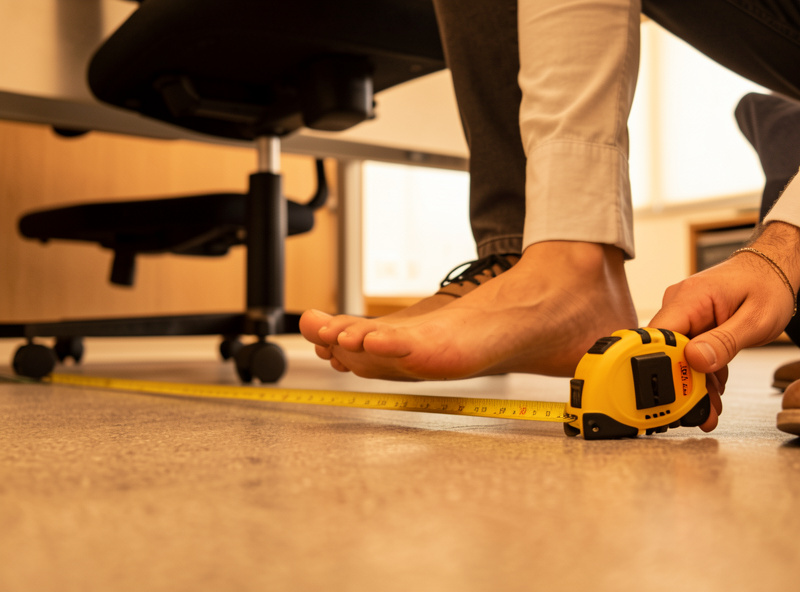
So before any purchase, take the measurement. Sit at elbow height, feet hanging naturally, and measure the vertical gap from your heel to the floor. In my log that gap is the single number that tells me whether to buy, and which height of footrest to buy. No gap, no footrest.
The cheaper fixes that come first
A footrest treats a symptom. Sometimes the cheaper move is to remove the cause, so the dangling feet never happen. Run these checks before you spend on a platform, because two of them cost nothing.
The first free fix is desk height. If you have a height-adjustable desk, you may not need to raise the chair as high in the first place. Lower the desk surface so the elbow line meets a chair height where your feet still reach. A sit-stand frame solves the geometry that a fixed desk forces a footrest to patch. My desk height guide walks the numbers.
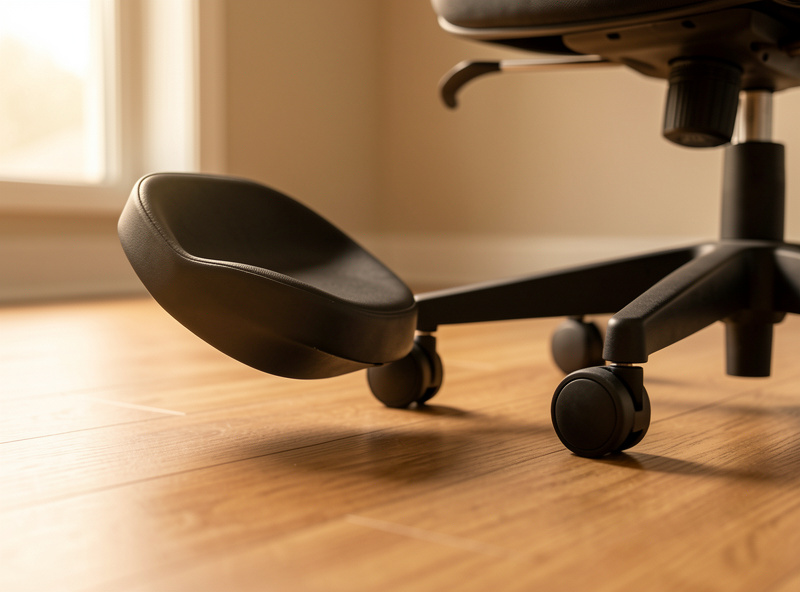
The second check is the chair itself. A chair that does not lower far enough, or one with a seat pan that is too deep, can push you into the dangle even when your legs would otherwise reach. If the chair is the limiter, the chair is the buy, not the footrest. I lay out what to look for in the ergonomic chair guide, and seat depth specifically in the femur rule.
Only when the desk is as low as it goes, the chair is right, and your feet still dangle does the footrest become the correct, smallest fix. At that point it is doing a real job: giving your feet a flat surface to press against at a height that matches your measured gap. That is the whole purpose, and it is a geometry purpose, not a wellness one.
The types, and what each one changes
Footrests split into four useful categories. They differ in whether the surface stays flat or moves, how much height they add, and whether you can tune that height. Match the type to your measured gap and to how much you fidget.
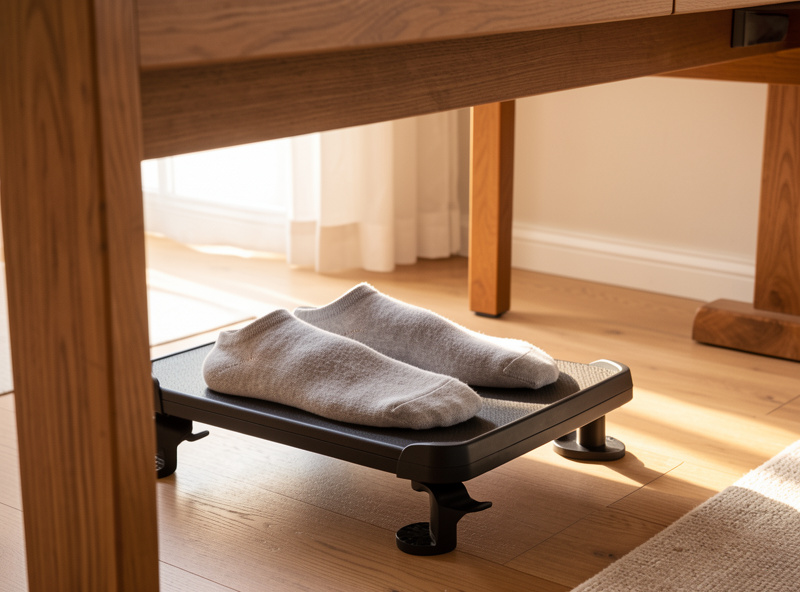
A fixed platform is the simplest: a solid block or angled wedge at one height. A rocking or tilting rest lets the surface move under your feet so you can shift through the day. A large under-desk wedge is a big sloped surface for people who want to rest the whole foot at an angle. A height-adjustable rest lets you dial both the height and often the tilt, which is what I reach for when the gap is unusual.
| Type | What it does | Adjustability | Best for | Rough price band |
| Fixed platform | One flat or angled surface at a set height | None | A small, known gap that never changes | Low |
| Rocking / tilting | Surface moves under the foot so you can shift | Tilt only, height fixed | Fidgeters who want foot movement at a desk | Low to mid |
| Large under-desk wedge | Big sloped surface for the whole foot | Usually none | Wide stance, resting both feet at an angle | Mid |
| Adjustable-height | Dial in both height and often tilt angle | Height and tilt | An unusual gap or a shared desk | Mid to higher |
The honest takeaway from my log: the rocking type gets used more, because a fixed flat platform turns into the thing you forget your feet are on. Movement keeps it relevant. But if your gap is small and constant, a cheap fixed wedge is genuinely all you need, and the adjustable models are over-buying.
Sizing to your measured gap and angle
Buy to the number you measured, not to a star rating. The platform height should roughly close the gap from your heel to the floor at elbow-height chair setting, leaving your thighs close to level and your feet flat on the surface.
Two numbers matter. The first is the height the footrest adds. If your measured heel-to-floor gap was, say, four inches, you want a rest that puts the resting surface around that height, so your feet land flat instead of pointing down. If a fixed platform only comes in one height that is far off your gap, it is the wrong product; that is the case for the adjustable type.
The second is the angle. A slight tilt lets the foot rest naturally rather than flat-flat, and a tilting model lets you change it through a long sit. Keep thigh clearance in mind too: the footrest cannot be so tall that it lifts your knees and ruins the level-thigh line you set with the chair. If raising your feet forces your knees up, the chair is now too high for the rest you bought, and you re-measure.
One more practical note: width. A narrow platform forces your feet together; a wider surface lets you spread to a natural stance. If you sit with feet apart, measure that too and buy wide. The general computer-workstation layout principles at OSHA’s workstation eTool treat feet-flat support as part of the seated geometry, which is the same framing I use: a footrest is a support surface, sized to you, not a comfort gadget.
Which survived and which flattened
I have run several footrests through long stretches at the desk, and they do not age equally. The failure mode is almost always the foam, so the build of the surface matters more than the marketing around it. Here is what held up.
The hard-shell rocking rest and the solid-plastic adjustable platform are the ones still in service. They do not compress, so the height I measured for is the height I still get a year later. The angle stays true and the surface does not develop a dished hollow where my heels sit.
The soft-foam wedges did not survive. After a few months of daily use the foam took a set, the resting height dropped, and the gap I had carefully sized for opened back up. A footrest that loses height is worse than none, because it quietly puts you back into the dangle while feeling like a solution. If you buy foam, buy dense foam or a hard shell, and treat a soft squishy wedge as a short-term item. This is the same lesson my anti-fatigue mats taught me: the cheap foam flattens, the firm material lasts.
When a footrest is just clutter
The shortest section, because it is the most important. If your feet are flat on the floor at the right chair height, a footrest adds nothing but an obstacle for your chair casters. Do not buy comfort theater.
It is clutter in three cases. When your feet already reach the floor, a footrest only restricts how you can shift your legs. When the real problem is a desk that is too high and you have a sit-stand frame, lower the desk instead. And when the chair is wrong, fix the chair, because a footrest stacked on a bad chair just locks in the bad geometry. The footrest is the last, smallest correction, not the first reach.
If you have run the diagnosis and a real gap remains, then it is a worth-it buy. When you shop, I look at the under desk footrest listings and the adjustable foot rest office models, and I size to my measured gap rather than to whichever has the most reviews.
As an Amazon Associate I earn from qualifying purchases.
This footrest decision sits inside the larger peripheral layer. For the full set of small desk supports and how they fit together, see the ergonomic peripheral tools guide, and the related surface accessories in the document holder guide and wrist pad guide.
Do I actually need a footrest?
Only if your feet dangle once you raise the chair to elbow height. Measure the heel-to-floor gap first. If your feet sit flat on the floor at the correct chair height, a footrest adds nothing.
What causes my feet to stop reaching the floor?
Raising the chair so your elbows meet desk height pushes the seat above your lower-leg length, common with shorter femurs or a fixed-height desk that cannot drop to meet a lower chair. It is geometry, not how you sit.
How tall should the footrest be?
Roughly the size of the heel-to-floor gap you measured at elbow-height chair setting, so your feet land flat and your thighs stay close to level. If it lifts your knees, it is too tall and the chair is now too high.
Fixed or rocking footrest?
A fixed platform is fine for a small constant gap and costs least. A rocking or tilting rest gets used more because it lets your feet move through a long sit, so it stays relevant rather than being forgotten.
Is a cheaper fix available before buying one?
Yes. If you have a sit-stand desk, lower the surface so the elbow line meets a chair height where your feet still reach. And if the chair will not lower enough or its seat is too deep, fix the chair first.
Why did my foam footrest get worse over time?
Soft foam takes a set under daily use, the resting height drops, and the gap you sized for opens back up, quietly returning you to the dangle. Buy a hard shell or dense foam; treat squishy wedges as short-term.
