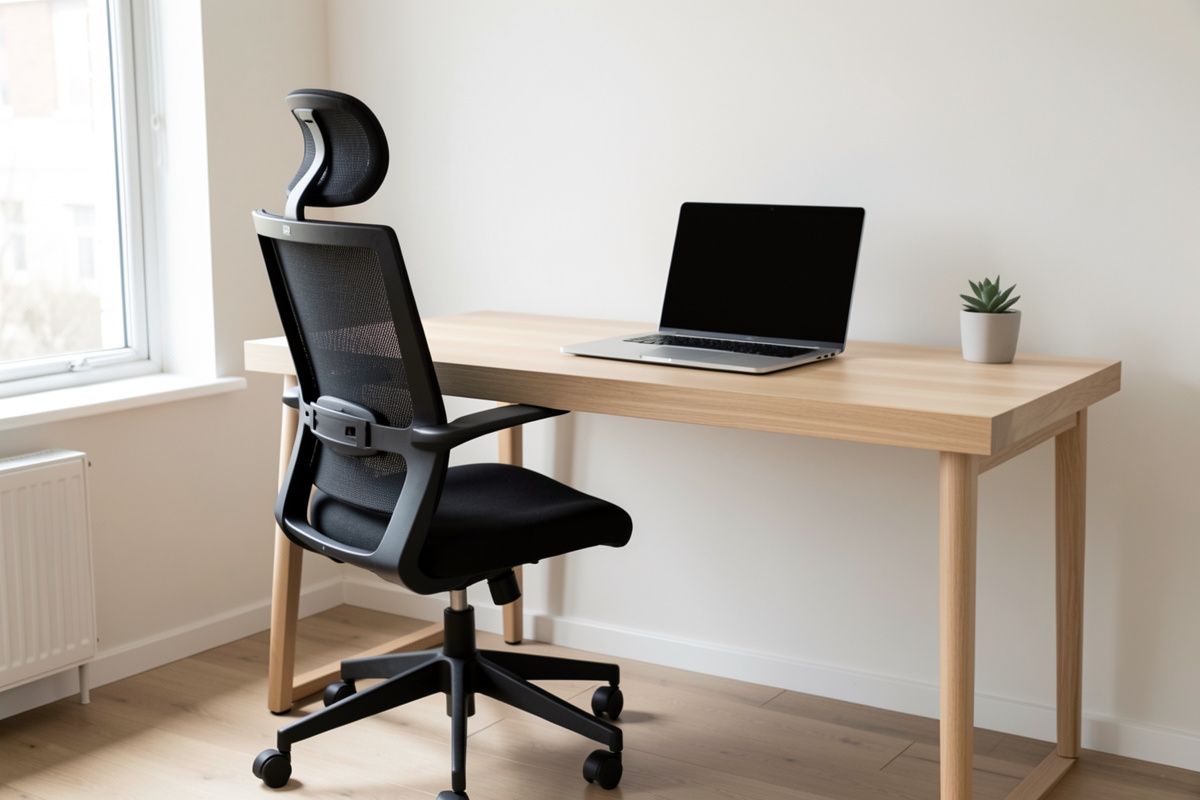

A budget ergonomic chair can fit you adequately if its fixed dimensions happen to match your body, but it cannot adapt as your needs change and it will not hold its shape as long. The honest limit is adjustability and longevity, not comfort on day one.
I keep a budget chair in my office specifically so I can speak to this from use rather than snobbery. It is not a scam and it is not garbage; it is a compromise with predictable edges. This is a comfort-and-durability assessment, not a health one, and the goal is to tell you honestly when a budget chair is the right call and when it is false economy.
What a Budget Chair Does Well
A decent budget chair gets you a working seat that, on day one and for someone whose proportions match its fixed geometry, is genuinely comfortable. If your femur, popliteal height, and elbow height happen to land near its built-in settings, you may never feel its limits at all.
This is the part people overcorrect on. A budget chair is not automatically uncomfortable, and if you are close to statistically average in height and proportion, a well-chosen one can serve you for a couple of years without complaint. The budget chair in my office was perfectly pleasant for the first months, and for a visitor of average build it still is. The value case for budget is real when the fit happens to land and the timeframe is short, a temporary setup, a guest desk, a tight starting budget. I would never tell someone in that situation they must spend more; I would tell them to spend their limited money on getting the fit as close as the fixed dimensions allow.
The Fixed-Dimension Trap
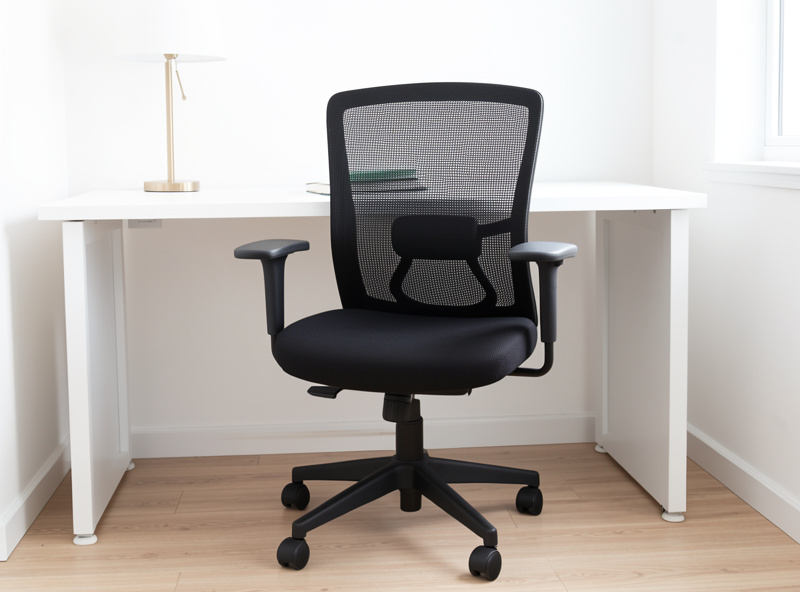
The defining limit of a budget chair is fixed dimensions: a seat pan you cannot slide, a lumbar you cannot move, armrests you cannot raise. If any of those fixed numbers is wrong for your body, you cannot correct it, and the chair fights you for as long as you own it.
This is where budget chairs actually fail, and it is a geometry problem, not a comfort-of-materials problem. My budget chair’s seat pan runs about 3 cm too deep for me, and because it does not slide, there is no fix, I perch forward and lose the backrest within a couple of hours. A taller person finds the same pan too shallow. The lumbar, fixed at one height, suits whoever the factory targeted and nobody else. Every one of these would be a five-second adjustment on a chair with a sliding pan and a height-adjustable lumbar, and on the budget chair it is simply a permanent condition. That is the trap: you are betting that the factory’s fixed numbers match your body, and the odds are poor unless you are average. The full reasoning is in the seat depth femur rule and the chair fit by body measurements method.
The Longevity Limit
The second budget limit is service life: low-density foam flattens and cheap mesh sags within a year or two of daily use, which does not just make the chair less comfortable, it changes the geometry you originally fitted and pushes you out of position. A budget chair is a one-to-two-year tool, not a decade one.
My budget mesh chair sagged at the seat front inside about a year, and the moment it dished out, the effective seat depth shortened and the fit I had accepted went with it. That is the hidden cost of the budget tier: even when the fit starts acceptable, the material does not hold it. Contrast that with a contract-grade chair built for ten-plus years across many bodies, and the cost-per-year math flips hard. This is exactly why the used premium chair argument exists, a used contract chair often costs little more than a new budget one and lasts five to ten times as long, while actually adjusting to your body.
It helps to run the cost-per-year rather than the sticker price, the way I do with any piece of gear I expect to use daily. A budget chair that needs replacing every two years is not a one-time purchase, it is a recurring one, and three replacement cycles can quietly add up to more than a single used contract chair that you set once and keep for a decade. I have watched exactly that happen in my own office, where two budget chairs came and went in the time my used premium chair has simply kept working. The cheaper line on the receipt is not always the cheaper chair over the years you actually sit in it, and the longevity limit is what turns a tempting price into false economy for anyone planning to stay put.
When a Budget Chair Is the Right Call
Buy budget when your proportions are near average, your timeframe is short, or your money is genuinely tight, and accept the chair for what it is. Buy up a tier, ideally used premium, when you are tall, short, differently proportioned, or planning to keep the chair for years.
The decision is not about willpower or aspiration, it is about your two numbers and your timeline. If your measurements land near a budget chair’s fixed settings and you need a seat for a year, a budget chair is a perfectly rational buy, and a budget ergonomic office chair can be a sensible short-term pick. If your dimensions are outside the average band, or you want one chair for the next decade, the fixed-dimension and longevity limits are precisely where the budget tier costs you more than it saves, and the used-premium route becomes the better math. The whole framework lives in the ergonomic chair guide.
Getting the Most From a Budget Chair
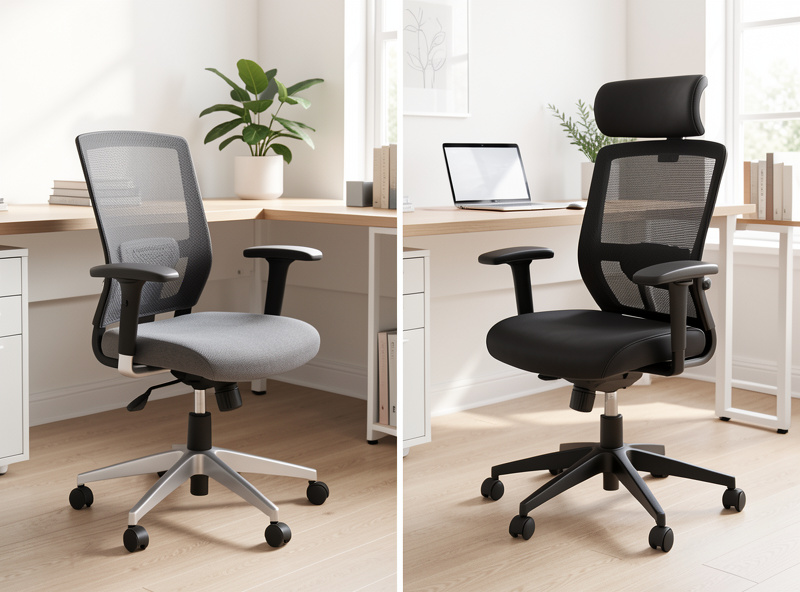
If a budget chair is your choice, set what little it lets you set, seat height to your popliteal height, and accept that the fixed dimensions are fixed, then watch for the sag or flatten that signals the end of its useful life. A budget chair rewards realistic expectations.
Adjust the one or two things you can, usually seat height and maybe tilt tension, to get as close to your fitted geometry as the chair allows. Do not bolt on a lumbar cushion to fix a too-deep seat, it only pushes you further forward; if the pan is too deep, the chair is simply wrong for you and no accessory fixes geometry. And keep an eye on the seat: the day it starts to sag or dish is the day the fit begins to drift, and that is your signal to plan the next chair. One cheap improvement that does pay off is a footrest if the fixed seat sits a touch high for your popliteal height, because supporting your feet restores the thigh-level position the seat height cannot, and a flat footrest costs far less than the chair. That is the one accessory I will endorse on a budget chair, precisely because it corrects a height gap rather than pretending to fix geometry it cannot. Treated as the short-term, average-fit tool it is, a budget chair does its job. Asked to be a decade-long, any-body solution, it cannot, and that is the honest limit.
Frequently Asked Questions
Are budget ergonomic chairs any good?
Yes, for the right person and timeframe. A decent budget chair is comfortable on day one if your proportions match its fixed dimensions. Its limits are that it cannot adjust to non-average bodies and its materials sag or flatten within a year or two.
What is the main limitation of a budget office chair?
Fixed dimensions. A seat pan you cannot slide, a lumbar you cannot move, and armrests you cannot raise mean that if any fixed number is wrong for your body, you cannot correct it. That makes fit a gamble outside average proportions.
How long does a budget office chair last?
Roughly one to two years of daily use before low-density foam flattens or cheap mesh sags. That not only reduces comfort but shortens the effective seat depth and pushes you out of the position you originally fitted.
Is a used premium chair better than a new budget one?
Usually yes. A used contract chair often costs little more than a new budget chair but adjusts to your body and lasts five to ten times longer. Budget makes sense mainly for average builds, short timeframes, or genuinely tight money.
Can I add a lumbar cushion to fix a budget chair?
A cushion will not fix a too-deep seat; it only pushes you further forward off the backrest. Accessories cannot correct fixed geometry. If the seat pan is wrong for your femur, the chair is the wrong size for you, full stop.
As an Amazon Associate I earn from qualifying purchases. The link above is a category search link to gear I use myself; it costs you nothing extra. This is comfort-and-geometry guidance, not medical advice.
